
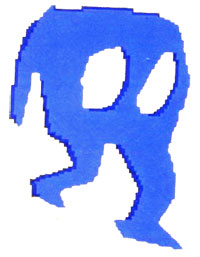
 The ZX Spectrum is a great technological milestone. Not only was it pretty much the first popular home computer, it contained – as the rainbow device on the right hand side of the machine will verify – the first gay microprocessor.
To save memory space, most of the games written for it were rubbish. However, most of the eighteen thousand programs written for it were gaming titles, and it did come up with some classics, among which are what is known as the Horace series. Not a great deal is known about the author of the series – William Tang – except that he suffered a collapsed lung halfway through writing them.
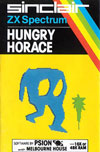
The first Horace game was Hungry Horace, published in
1982. In truth, it could just as easily
have been called Unoriginal William, as it was one of countless clones
attempting to cash in on the success of Pac Man. Horace has to charge around a park, by
which we mean maze, eating food, by which we mean power pills, and avoiding guards,
by which we mean ghosts. Pac Man is in
himself iconic, with his tennis-ball-sliced-by-a-lawnmower profile appearing on
almost every consumer item known to humanity.
Horace looks pretty much the same, but turned three-quarters on and with
legs. The Commodore 64 version of the
game featured a level editor, which allowed players to create unique games and
save them to something called a cassette tape.
 Tang was on something of a roll in 1982, and later that year
he produced Horace Goes Skiing. This is
not really a sequel in the sense that it follows on from the previous title in
any narrative sense, but it does use the same theme – ie, looking quite similar
to another, hugely popular game. This
time it’s Frogger under the spotlight as Horace negotiates his way across a
busy highway in order to – improbably – hire some skis. Once hired, Horace must re cross the road
and slalom down a mountain, with the Spectrum’s formidable graphics engine
making him look like a discarded pair of tights. Horace Goes Skiing had a rather amusing
dynamic, in that Horace needed money to do anything, such as pay for ambulances
after being hit by speeding cars. He
was awarded $10 for every thousand points scored.
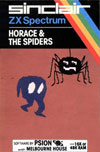
1983 saw Horace at it again, and this time Tang was in no
way influenced by Pitfall, or possibly Lode Runner, as he produced Horace and
the Spiders. This game is in three
parts: in part one, Horace climbs up a sharp incline while jumping over
spiders, which, in part two, he avoids by swinging from strands of spider
web. Part three finds him making holes
in the same spiders’ webs from which he
was previously dangling, and then jumping on the unsuspecting arachnids as they
try to repair the damage.
Horace To The Rescue was slated to be the next in the
series, due in late 1985, however it was at this point that Tang suffered
health problems and the game was never written. It could possibly have been that there were
no prominent high profile games which featured characters going to the rescue
of other characters, and that therefore Tang’s inspiration remained
unkindled. Indeed, after his spider
battles, Horace becomes somewhat enigmatic himself. In 1995, he resurfaced in the obscure
platform game Horace In The Mystic Woods, which was written by Michael Ware,
and rumours abound of a pirate called Horace Takes A Trip, about which nothing
is known.
In common with his creation, William Tang has also vanished
from the electronic pages of computer history.
To his great credit, he managed to conjure up a highly playable, if not
entirely original, series of games at a time when sequels, spin offs,
franchises and so forth were entirely unheard of. And it’s not like he was the only person
cloning stuff in the first great free-for-all of video gaming. So well done Horace, and well done William
Tang. Hope the lung sorted itself out.
Comments are closed.